


IoT Connectivity Infrastructure
The device can be remotely monitored and managed by connecting to the internet via LTE and Wi-Fi connectivity options.

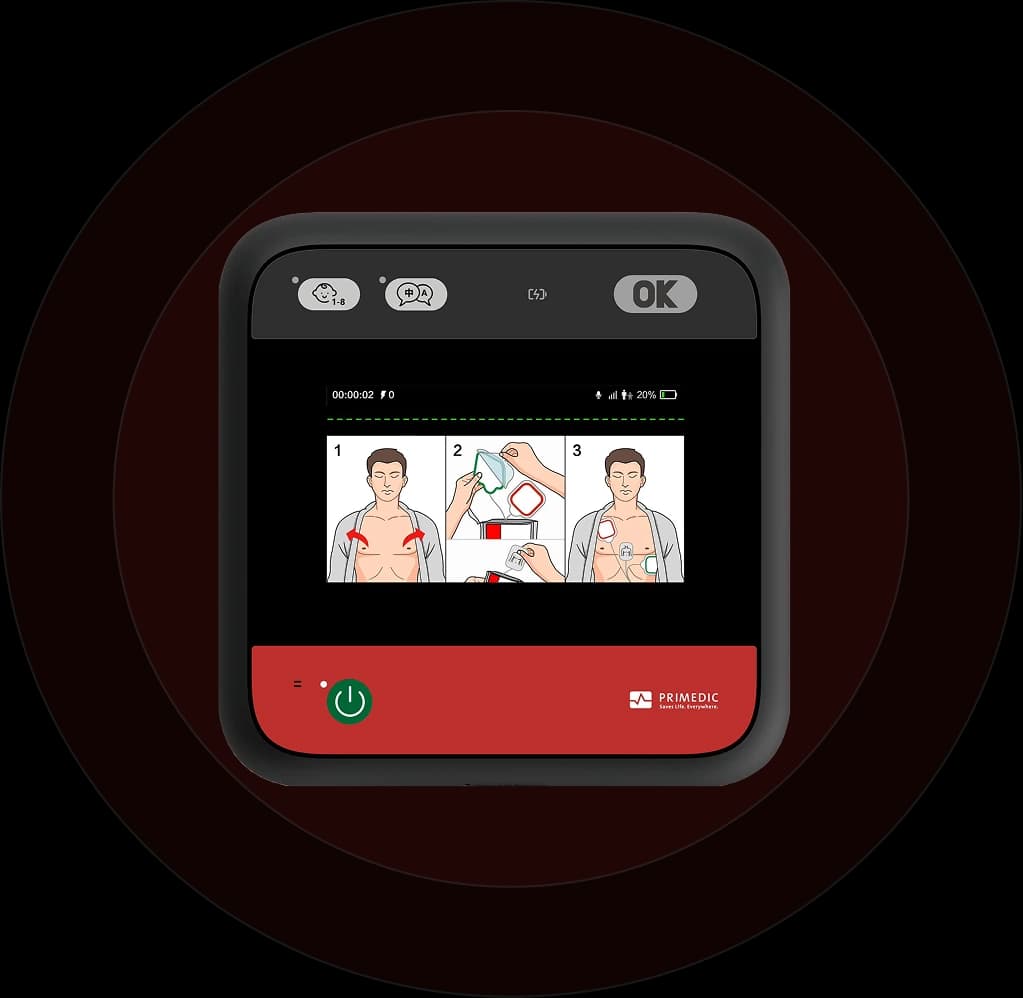
Designed for use in sudden cardiac arrest situations, the HeartSave myPAD analyzes the heart rhythm, delivers automatic defibrillation when necessary, and provides step-by-step guidance to the user for CPR administration.
Using a Biphasic Truncated Exponential (BTE) waveform, the current is delivered in two phases. The energy is automatically adjusted according to the patient's chest impedance.
The device measures impedance through the electrode pads. It optimizes the delivered defibrillation energy based on the individual patient.
Energy is incrementally escalated in adult patients. Shock efficacy is enhanced through 150 J → 170 J → 200 J levels.
Pediatric mode is activated with a single button press. A safe shock energy of 50 J is delivered for pediatric patients. The CPR feedback function is disabled in this mode.
The heart rhythm is analyzed within 5–8 seconds. When a shockable rhythm is detected, the device is ready to intervene within 13–16 seconds.
The system monitors a range of 30–300 bpm and measures impedance between 25–200 Ω. It provides safe analysis in compliance with the IEC 60601-2-4 standard.
The device automatically detects life-threatening rhythms. Ventricular fibrillation (VF) detection sensitivity is ≥ 90%, and pulseless ventricular tachycardia (VT) detection sensitivity is ≥ 75%.
Normal rhythms are differentiated to prevent unnecessary shock delivery. Sinus rhythm specificity is ≥ 99%, and asystole specificity is ≥ 95%.
The risk of unnecessary shock delivery is extremely low. The positive predictive value is 98.2%, and the false positive rate is 0.9%. Reliable rhythm analysis is ensured through high accuracy rates.
Watch a brief introductory video to explore the HeartSave myPAD's workflow and the operating principle of the CPR feedback sensor.
With its IoT connectivity infrastructure, the HeartSave myPAD enables remote monitoring and management of devices, as well as secure recording of operational data. The cloud-based system ensures AED devices are always kept in a ready-to-use state.
The device can be remotely monitored and managed by connecting to the internet via LTE and Wi-Fi connectivity options.
Multiple AED devices can be tracked from a centralized dashboard through the myAED Control platform.
Device settings and system configuration can be performed remotely via computer, tablet, or mobile device.
Self-test results and potential fault conditions are transmitted to the cloud platform, and notifications are sent to the user.
The device performs daily and periodic automatic tests, checking the battery, electrode pads, and system modules.
ECG, CPR, and event records are stored in the device memory and can be transferred via USB or cloud connection.
Designed for use in sudden cardiac arrest situations, the HeartSave myPAD analyzes the heart rhythm, delivers automatic defibrillation when necessary, and provides step-by-step guidance to the user for CPR administration.
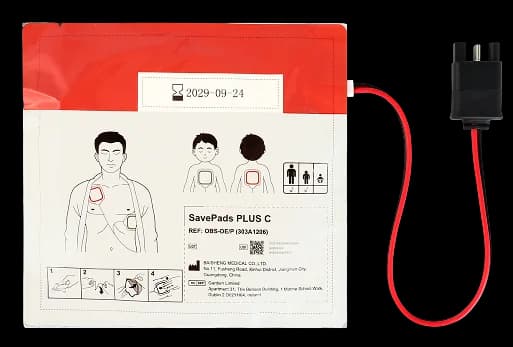
The SavePads PLUS electrode pads used with the HeartSave myPAD are designed to analyze the heart rhythm and safely deliver defibrillation energy to the patient.
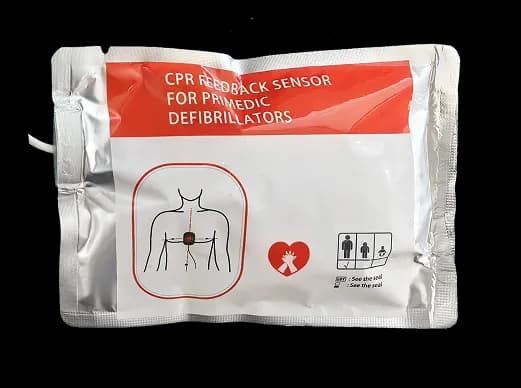
The sensor-equipped electrode pads measure the compression rate and depth applied during chest compressions, providing the user with real-time feedback for proper CPR administration.
Contact us to learn more about Primedic defibrillator solutions for workplaces, institutions, and individual users, and to place an order.